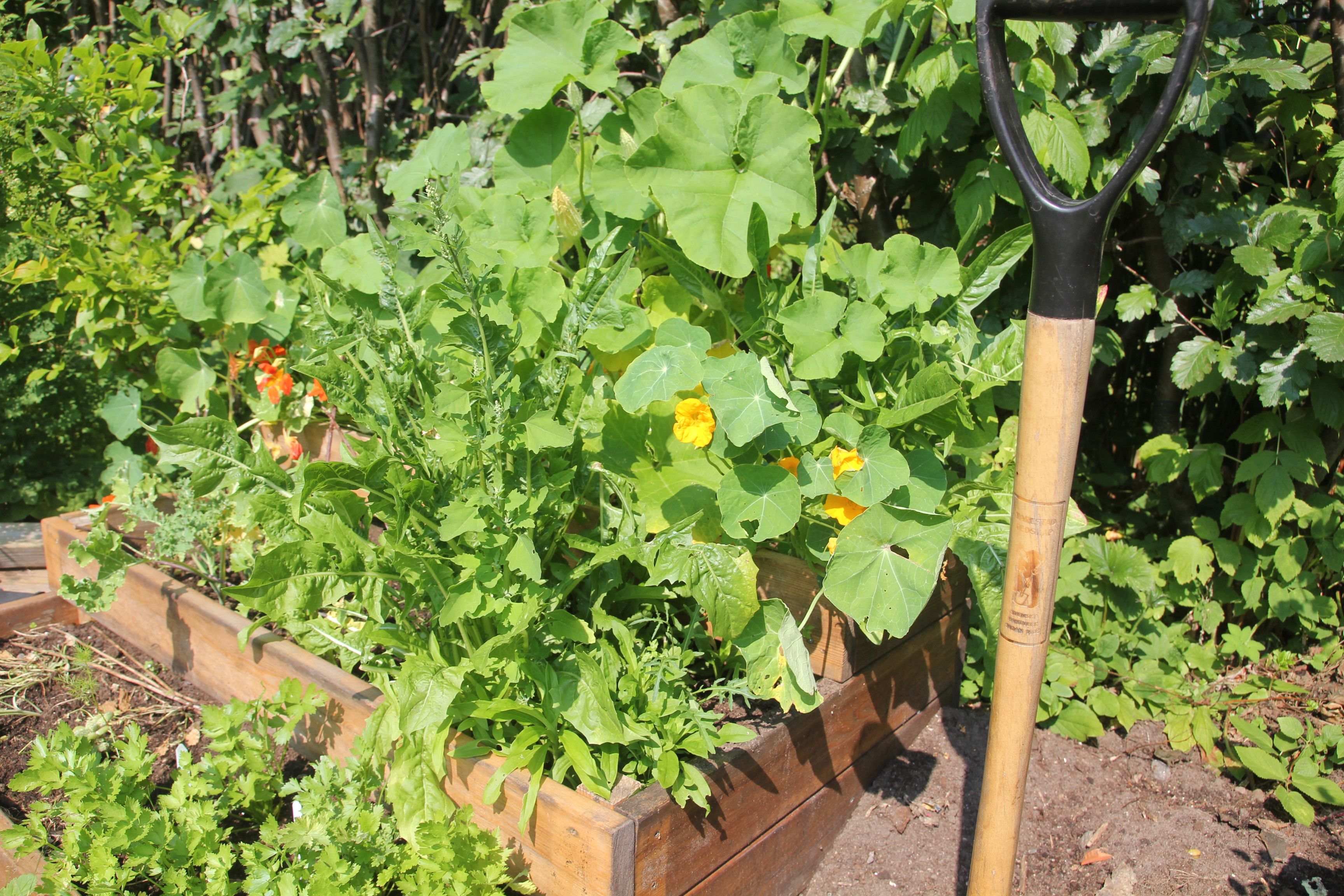
Raised beds solve a specific problem that affects most Canadian urban gardens: the ground itself. Whether the existing soil is compacted clay in a Toronto backyard, contaminated fill in a Vancouver lot, or asphalt underneath a community garden plot in Montreal, building up rather than digging down sidesteps the issue entirely. A frame filled with a controlled growing medium puts the gardener in charge of drainage, nutrient density, and pH from the first season.
This is not a comprehensive catalogue of every raised bed approach. It covers the decisions that actually affect outcomes — frame size, material, soil composition, and drainage — with attention to conditions common in Canadian climates.
Frame Dimensions: Why 4 Feet Wide Matters
The standard recommendation of a 4-foot (approximately 1.2 m) maximum width comes from a straightforward ergonomic constraint: most adults can reach the centre of a 4-foot-wide bed from either side without stepping into it. Stepping into a raised bed compacts the growing medium and defeats the primary structural advantage of the system.
Length is more flexible. Beds between 6 and 12 feet (1.8–3.6 m) are common and manageable. Longer runs can be difficult to work around efficiently and make watering uneven if using a single drip emitter. For small urban lots — 200 to 400 square feet of dedicated growing space — two 4×8-foot beds often provide more practical yield than one large frame because pathways between beds allow full access from both sides.
Height influences the range of crops you can grow. A 20 cm (8-inch) deep frame suits lettuce, spinach, radishes, and most herbs. Root crops — carrots, parsnips, beets — need 30 to 45 cm (12–18 inches) of depth. Tomatoes and peppers planted in raised beds benefit from at least 45 cm, both for root volume and heat retention. Taller frames (60+ cm) also reduce bending, which matters for gardeners with limited mobility, and they warm up faster in spring because more of the soil mass sits above ground level and absorbs direct sunlight.
Wood Selection in a Canadian Context
Cedar is the most commonly recommended material for Canadian raised beds because it resists rot without chemical treatment, holds up reasonably well through freeze-thaw cycles, and is widely available at lumber yards in most provinces. A 2×10-inch cedar board (nominal) is the standard choice for a 25 cm deep frame — thicker stock lasts longer but adds cost and weight.
Pressure-treated lumber is controversial for food gardens, and the controversy has shifted over time. The older chromated copper arsenate (CCA) formulations used before 2004 are genuinely problematic for edible beds. The current generation of pressure-treated wood uses copper-based preservatives (ACQ, CA, or MCA) that have lower leaching rates. Health Canada and the Canadian Wood Council have reviewed these and concluded that migration into soil is minimal under normal growing conditions. That said, many gardeners prefer to avoid treated wood in direct contact with food crops, and cedar or Douglas fir are readily available alternatives that don't require that judgment call.
Douglas fir is denser and stronger than cedar but less rot-resistant. Depending on how well-drained the bed is and how wet the site, it may last 5–10 years rather than the 15–20 years often cited for cedar. Hemlock is similar. Spruce is the least suitable of the common softwoods — it absorbs moisture readily and begins deteriorating in contact with soil within a few seasons.
Soil Composition: The 60/30/10 Starting Point
A widely used starting formula for raised bed fill is often called "Mel's Mix" after Mel Bartholomew's square foot gardening method, though variations on it predate that specific name. The ratio that works well in Canadian urban conditions is approximately:
- 60% quality topsoil or screened loam — provides mineral content and bulk
- 30% mature compost — ideally a blend of two or three sources (municipal, mushroom compost, worm castings) to broaden nutrient diversity
- 10% coarse perlite or vermiculite — improves drainage and prevents compaction as the organic matter breaks down
Bagged "garden soil" sold at big-box retailers varies considerably in quality. Reading the ingredient list matters: topsoil mixed with bark fines can become hydrophobic when it dries out and doesn't support the root structures that heavy-feeding vegetables need. Screened compost blends sold by the yard at local landscape suppliers often outperform retail bagged products at lower cost per cubic foot, which is relevant when filling beds that are 30+ cm deep.
pH for most vegetables should sit between 6.0 and 7.0. Canadian municipal compost tends to be slightly alkaline (7.0–7.5 range). Blueberries and potatoes prefer more acidic conditions (5.0–5.5) and may warrant a separate bed or amendment. A basic soil pH test from a garden centre — a metre probe or the coloured liquid kit — is worth doing in the first season before troubleshooting nutrient deficiencies.
Drainage: The Factor Most Often Overlooked
Even a well-designed raised bed can become waterlogged if it's sited incorrectly or built without a drainage layer. On concrete surfaces (patios, rooftops), a 5 cm layer of coarse gravel or crushed stone at the base of the frame allows excess water to escape laterally. On soil, the existing ground usually provides adequate drainage unless the site sits in a low spot that collects water.
Landscape fabric at the base of a raised bed is optional. It slows weed emergence from below and keeps soil from migrating out of the frame, but it also restricts drainage if it becomes clogged with fine particles over time. Cardboard laid directly on grass before adding soil is a simpler approach that decomposes within a season and suppresses weeds without the long-term drainage issues.
Rooftop and balcony beds need particular attention to weight. A 4×8-foot frame filled to 30 cm depth with saturated growing medium can weigh 500–700 kg (roughly 1,100–1,500 lbs). Structural assessment by a professional before placing beds on a roof or upper-floor balcony is not optional — this is a building code consideration in most Canadian municipalities.
What to Plant in a Canadian Raised Bed
The hardiness zone determines timing more than it determines what is possible. Zone 5 (most of southern Ontario and Quebec) and Zone 6 (southern BC interior, parts of Nova Scotia) allow a broad range of warm-season crops with indoor seed starting in March and transplanting after the last frost date — typically late May in Ontario, early April on the BC coast.
Crops that consistently perform well in Canadian raised beds:
- Tomatoes — Determinate varieties (Bush Early Girl, Tumbling Tom) suit smaller frames; indeterminate varieties need caging and more depth
- Lettuce, spinach, arugula — Cool-season crops that fill the bed in early spring and again in fall; bolt in July heat
- Bush beans — High yield per square foot, nitrogen-fixing roots benefit the bed long-term
- Kale and chard — Tolerate frost well, extend the harvest season into October or November in Zones 5–7
- Zucchini — Productive but space-intensive; one plant fills a 2×4 section of a bed
- Radishes and beets — Fast-growing, useful for filling gaps between slower crops
Maintenance Through the Season
Raised beds lose volume as organic matter decomposes — typically 5–10 cm per season. Adding 5 cm of compost each spring before planting restores structure and nutrient levels without complete replacement. Amending in place, rather than removing and refilling, preserves the biology that builds up in established beds over multiple seasons.
Watering frequency depends on bed depth, material, and temperature. Shallow cedar frames in full sun on a hot August day in Calgary may need watering twice daily. Deeper frames with more soil mass retain moisture longer. A simple finger test — push two fingers 5 cm into the soil; if it's dry, water — is more reliable than any schedule.
Raised beds reward consistent attention more than intensive effort. Ten minutes every other day outperforms two hours once a week when the goal is food production.
For more on timing your plantings throughout the Canadian growing season, see the seasonal planting schedule. For growing herbs in containers alongside or instead of raised beds, the container herb guide covers material selection, soil mixes, and winter management.